What Can We Use to Tell Truth from Falsehood?
Life is full of moments, large and small, where we must judge and decide. Whether to bring an umbrella, whether to take the bus or the subway, whether to go to the hospital — knowingly or not, we are judging and deciding something at every moment.
The purpose of this process of judgment is always to reach the best possible outcome. So we draw on information from this very moment — weather forecasts, traffic conditions, how our body feels — as well as accumulated knowledge like experience and advice, as the material for that judgment.
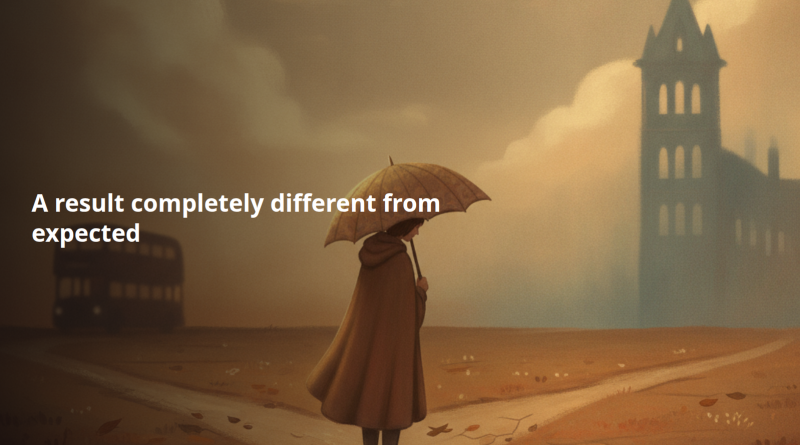
The problem comes when one piece of that material turns out to be false. Judging on bad information leads to a result completely different from what we expected. Forgetting an umbrella, or finding the subway on strike, is a small setback at worst — but missing the window to treat an illness is an entirely different matter.
That is why discerning information can hardly be overstated in importance. Its scope reaches far beyond a single person’s day — to groups, organizations, entire nations, and humanity as a whole. The idea that the earth is flat and that sailing to its edge means falling into an abyss, or that somewhere above the clouds there is a heaven where God lives — these were once fixed beliefs shared by all of humanity, information that in the end turned out to be false.
So what, then, do we use to tell truth from falsehood? 참성경 says:
“This world’s affairs invariably have a cause, and subsequently, they invariably have a result. Therefore, by observing the result, one discerns the truthfulness of the cause. Thus, when one examines the words of the Bible or the Buddhist scriptures, by looking at the cause and effect, one can ascertain whether these words are truly genuine or a lie. If the cause and effect do not align, then it is a lie.” — WIB 1:1-4
In other words: if you say you will do something, it is a true word only when it actually comes to pass in this world exactly as said — and if it does not come to pass, it is a lie. What is true cannot be a vague belief or hope; it must exist and be proven as a reality in this very moment, in this world.
참성경 also shows how this principle actually plays out:
“That is why today, the 격암유록 is a renowned scripture and one that we acknowledge, because its prophetic words have ultimately, as a result, all come to pass. Therefore, the 격암유록 is regarded as the most valuable book compared to other pamphlets and other texts.” — WIB 1:5-6
Because its words matched their results, it came to be recognized as true. False information doesn’t just ruin a single person’s day — it can lead all of humanity down the wrong path. By the same measure, the discernment that examines cause and result to tell truth from falsehood doesn’t just protect one person’s judgment — it is also the work of saving all of humanity from that falsehood.